
Business lockers built for the way you work.
“The Vecos locker experience has certainly been the best in our organization. All our clients and visitors that experienced it in our office said, ‘we need to put this is place'.”
Modern businesses need more from workplace storage than a locker assigned to an employee. Business lockers should work around how people actually use the workplace — whether employees have a fixed desk, share workspaces, work hybrid, or move between teams.
Vecos goes beyond traditional business and corporate lockers with Adaptive Workplace Storage that can adapt to changing users, use cases, and demand.

Traditional lockers are often designed around fixed assignments: one employee, one locker, one set of rules. Adaptive Workplace Storage by Vecos takes a different approach. The same pool of lockers can support different employees and use cases throughout the day, without manual reconfiguration.
Employees get secure storage when they need it. Facilities teams stay in control of access, availability, and usage through one centralized platform. The result: workplace storage as flexible as your workplace.

Built on real behavior. Learns in real time.
With 1.4 million lockers online in the cloud and billions of real locker interactions, Vecos technology is built around people’s storage needs in real workplaces.
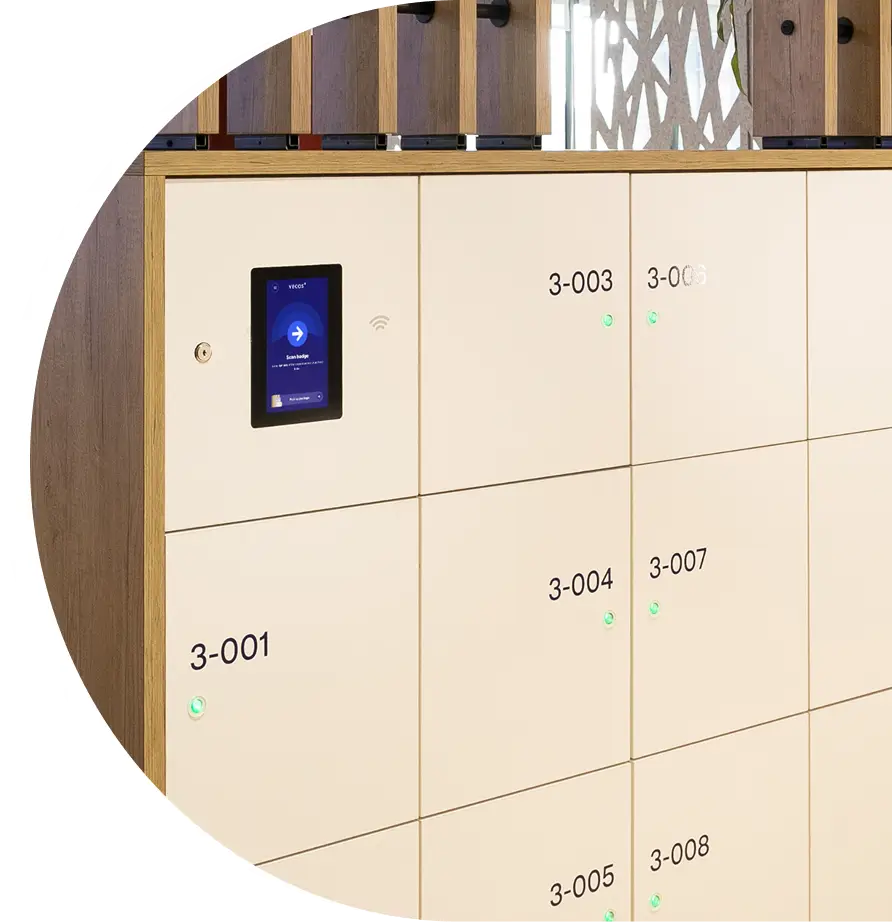
Corporate workplaces are becoming increasingly flexible. Employees may work from home several days a week, share desks, move between teams, or work from different locations.
That makes permanently assigned storage less efficient.
With Vecos, corporate lockers can be made available based on actual workplace demand. Employees can access an available locker when they arrive and release it when they leave, allowing the same storage capacity to serve more people.
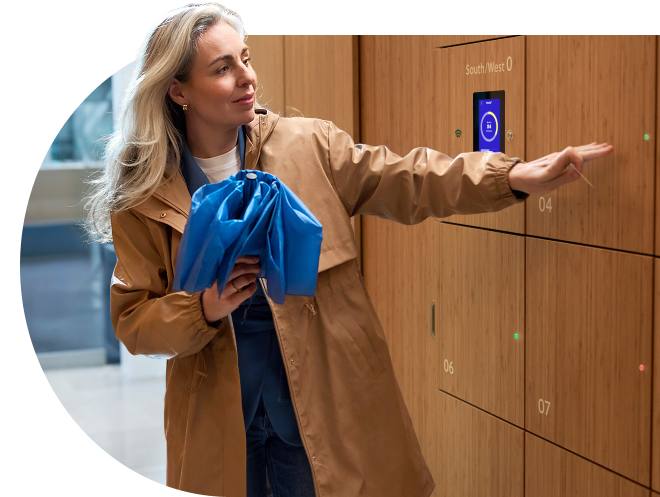
Workplace storage isn’t only about personal belongings. The same locker infrastructure can support different needs:
Instead of creating separate locker systems for each purpose, Vecos allows organizations to manage different use cases through the same platform.

















The best smart locker system for a large corporate office depends on more than secure access alone. Organizations should consider how easily the system can support different users and use cases, integrate with existing workplace technology, scale across locations, and adapt to changing occupancy and ways of working.
Key capabilities to consider include:
Vecos is designed around these requirements, combining smart locker hardware with software-based management and flexible storage allocation. This enables large organizations to manage workplace storage as scalable infrastructure. Deloitte, EY, SAP and PwC each run Vecos in 34 to 61 offices, and we already power 34% of the Forbes 100.
Vecos goes beyond traditional smart lockers by making storage responsive to real workplace behavior.
Fixed lockers become flexible storage.
With our business lockers, access, availability, and usage can change dynamically based on who needs storage and when. That means your locker infrastructure can adapt as your workforce, office utilization, and ways of working evolve. The result is better use of existing capacity, less manual administration and a better experience for employees.

As organizations grow and workplaces change, storage requirements change too. New teams, office moves, hybrid working patterns, and changing occupancy can all affect locker demand.
Vecos gives facilities and workplace teams the flexibility to configure, assign, and reassign storage without manually redesigning the entire locker setup.
Real-time usage and occupancy data also help teams understand demand and make informed decisions about their workplace infrastructure.
What are business lockers?
What are corporate lockers used for?
What makes Vecos different from traditional business lockers?
Are Vecos business lockers suitable for hybrid workplaces?
What should large companies look for in a smart locker system?
Can Vecos integrate with existing workplace systems?

With Vecos Adaptive Workplace Storage, employees get secure storage when they need it, while facilities teams get the control and insight to adapt storage as the workplace changes.