
A smart locker system makes lockers digital: keyless access, automated management and real-time usage data. An adaptive locker system goes one step further. It uses that data at the moment of use to decide who gets which locker, for how long and for which purpose, so storage follows how people actually use the office. Vecos offers both a smart locker system as well as a fully adaptive configurations within the same technology to customers, depending on their needs.
Vecos calls this Adaptive Workplace Storage. It is built on what we’ve learned from 1.4 million lockers online in 4,000+ offices, and we already power 34% of the Forbes 100.
“The Vecos locker experience has certainly been the best in our organization. All our clients and visitors that experienced it in our office said, ‘we need to put this is place'.”
A smart locker system can automate how lockers are accessed and managed. But the underlying rules may still be fixed to individual lockers, users, or use cases.
Vecos takes a different approach. Instead of defining storage rules upfront, the intelligent locker system responds dynamically to how people actually use the workplace: every locker can serve every use case, and lockers nobody uses are freed up automatically.
The difference is simple: Smart makes lockers digital. Adaptive makes storage responsive.

A smart locker system can be adaptive. But a locker system isn’t adaptive simply because it is digital, connected, or automated.

Built on real behavior. Learns in real time.
With 1.4 million lockers online in the cloud and billions of real locker interactions, Vecos technology is built around people’s storage needs in real workplaces.
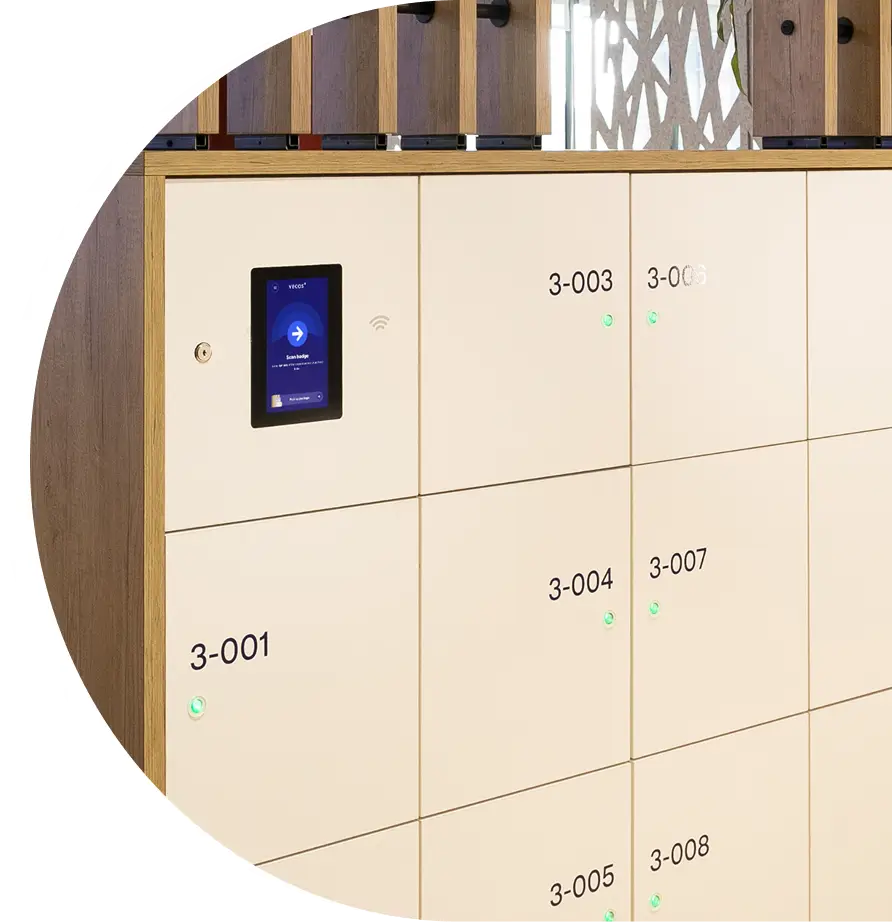
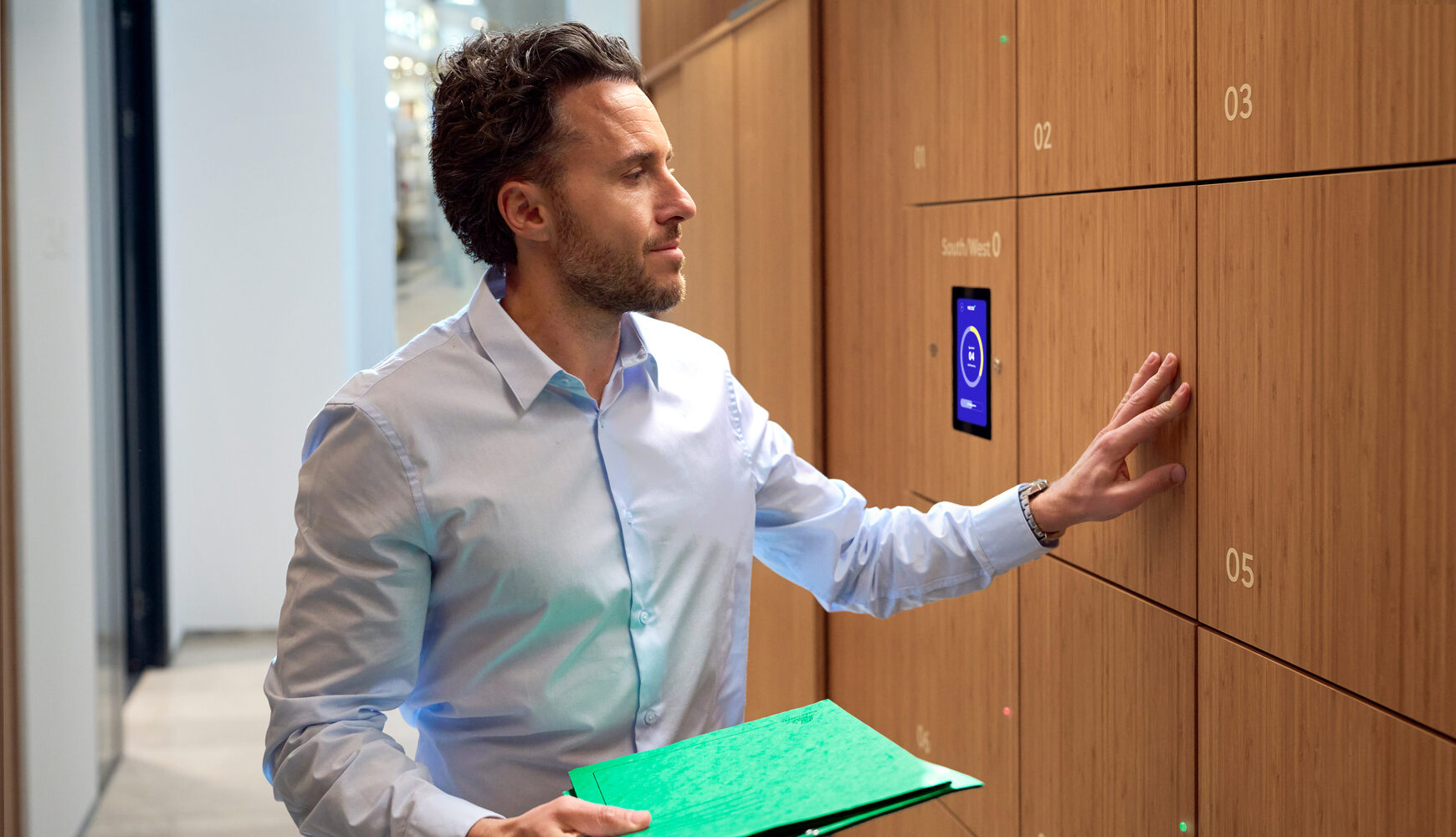
A smart locker system combines physical lockers with electronic access technology and software. Instead of traditional keys, users can access lockers using methods such as RFID badges, mobile credentials, or other digital authentication.
A smart locker system can manage access, assignments, availability, and usage through a centralized software platform. This makes lockers easier to manage and gives employees a more convenient experience.
However, many smart locker systems still run on predefined rules. A locker is permanently assigned to an employee, a team or one use case, and facilities decide upfront how many lockers each use case gets and for how long. When needs change, someone has to change the settings.

“Intelligent locker system” is usually another name for a smart locker system, with more focus on data: dashboards that show admins how lockers are being used.
Intelligence and adaptability are not the same thing.
An intelligent system knows that a locker is occupied. An adaptive system also knows whether it is used, and acts on it. Occupancy measures claiming. Utilization measures need. When a locker hasn’t been opened for a while, Vecos asks its user to keep it or free it up for a colleague. With these nudges in place, 94% of users release lockers they no longer need, against 53% without.
With adaptive storage, the same pool of lockers can support different employees and use cases without being permanently tied to one person or purpose.

Digital lockers or electronic lockers replace physical keys with digital access technology such as an employee badge. This is an important step forward from traditional lockers operated by keys or pin codes.
For a small site, that can be enough. For larger workplaces, digital access alone leaves three problems open: allocations that stay in sync with your employee database, active usage control to prevent dead space, and usage insight to get the best return over the full life of the hardware.
Digital and electronic lock solutions typically lack an online connection to a locker management software platform. This means they can track ownership on a lock-basis, but struggle to provide aggregated insights on usage, occupancy and usage trends.
A second challenge: offline digital and electronic locks need manual reconfiguration whenever demand shifts. In a live workplace, demand shifts all the time, so manual changes cost time and are out of date almost as soon as they are made.
With Vecos, the technology controls the locker and lets the whole locker pool respond to workplace needs.

Consider a workplace with 500 employees, but only a portion of them are in the office on any given day.
In a traditional setup, lockers may be permanently assigned to employees who are working from home that day. Those lockers remain unavailable to others.
With Vecos, the same pool of lockers can be used by different employees throughout the day.
One employee might use a locker for personal belongings. Later, another employee can use the same locker for day storage. The infrastructure can also support team storage, visitors, or asset management.
The locker doesn’t need to know who “owns” it. The system determines who needs storage.
This works in real offices. Boston Consulting Group in Singapore grew from 350 to 500 employees on the same 372 Vecos lockers. Across our customers, adaptive storage needs 40–60% fewer lockers than one locker per person.
Vecos is the inventor of smart locker technology and has accumulated knowledge, insights, and data on how people really use storage since 1996. With advanced configurations, highly reliable technology that always works, and a global deployment team, Vecos is the global leader in Adaptive Workplace Storage. One of the big differences sits in the way storage is managed and optimized continuously.
Traditional systems often start with the locker and define who can use it.
Vecos starts with the person, use case, and workplace need — and determines how storage should be made available.
That’s the idea behind Adaptive Workplace Storage.
Every adaptive decision draws on what we’ve learned from 1.4 million lockers online and billions of real locker interactions, in 4,000+ offices across 64 countries. So your setup starts from what works for workplaces like yours: same region, same industry, same kind of office. The platform is built, owned and secured in-house, from smart lock to cloud, with 99.97% uptime, proven for over a decade.

































Hybrid work, hot desking, shared workspaces, changing team structures, and variable office attendance all make fixed storage less efficient.
Workplace infrastructure needs to accommodate that variability.
Vecos enables organizations to make better use of their existing locker capacity while giving employees secure storage when and where they need it.
No permanent assumptions. No manual reconfiguration. Storage that adapts.
What is the difference between a smart locker system and an adaptive locker system?
Is Vecos a smart locker system?
Does an adaptive locker system replace smart lockers?
How do I choose between a smart and an adaptive locker system?

Bring your floor plan or current setup. In 20 minutes, our specialists test your storage assumptions against data from buildings like yours, and show what adaptive storage would change.